Where Horror Gets Studied, Skewered, and Celebrated.
Newest articles and reviews
What a Hays Code 2.0 Could Mean for Horror
By. Bee Delores
The day after the 2024 election, the Motion Picture Association (MPA) issued a statement congratulating Donald J. Trump on his second presidential win. “We look forward to working with [the administration] on a wide range of important issues for the film, TV, and streaming industry,” the MPA said, noting the industry “supports more than 2.7 million American jobs, boosts more than 240,000 businesses in cities and small towns across the country, and delivers over $242 billion in wages to our workforce each year. We commend everyone who worked this year to ensure fair elections and preserve our nation’s legitimate democratic processes.”
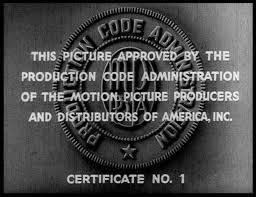
If you know your film history, you’re already aware that this strikes eerily similar to another dystopian moment in time: The Motion Picture Production Code (most popularly known as “The Hays Code”). Will H. Hayes was the first president of The Studio Relations Committee, which was formed by the Motion Picture Producers and Distributors of America (MPPDA) in 1930, as a direct response to growing concerns of government-imposed censorship. The committee’s job was to self-censor all major Hollywood studio productions. The committee was later renamed and reorganized as The Production Code Administration–bearing a resemblance to Trump’s Hollywood Ambassadors.
On January 16, 2025, four days before his inauguration, Trump posted on Truth Social, announcing actors Jon Voight, Mel Gibson, and Sylvester Stallone as his special Hollywood envoy. The industry “has lost much business over the last four years to Foreign Countries,” with hopes to get it “BACK—BIGGER, BETTER, AND STRONGER THAN EVER BEFORE! These three very talented people will be my eyes and ears, and I will get done what they suggest. It will again be, like The United States of America itself, The Golden Age of Hollywood!”
Over the past 14 months, Trump has wormed his way into Hollywood in alarming ways–from getting Jimmy Kimmel and other late-night talk show hosts suspended and bullying news programs until they give him money to helping Paramount Skydance buy Warner Bros. Discovery for a whopping $110 billion. This should scare everyone. We have never seen this level of dictatorial control from the White House. It seems unfathomable to be our reality, and foreshadows a near future in which films, particularly horror, are curtailed from showing anything that resembles LGBTQ+ representation, contain grotesque amounts of blood, guts, and gore, and feature sex scenes–or even remotely suggestive.
Looking at the Hays Code’s general principles, as compiled here, there is nary a stone unturned in its destructive intent. Movies were not allowed to produce any stories that could “lower the moral standards of those who see it,” such as images of crime and moments/scenes that could be deemed evil or sinful. Only “correct standards of life shall be presented.” That broad brush allowed the Production Code Administration the freedom to control major studio films in their entirety.
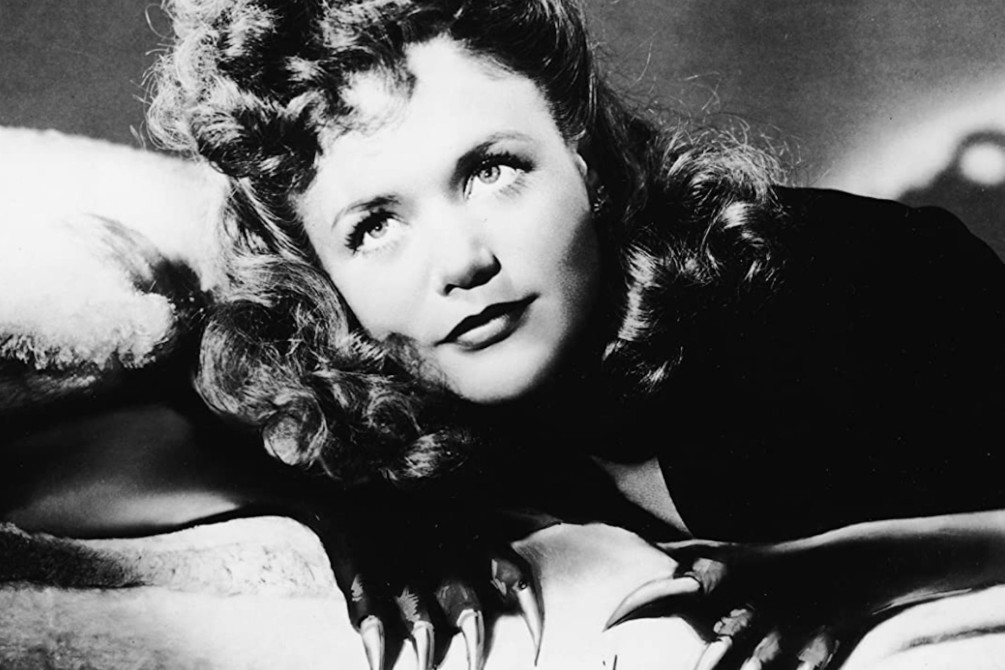
If you watch a film like 1942’s Cat People, my all-time favorite horror film, you can see screenwriter DeWitt Bodeen tiptoeing around its sexual implications. In the story, Irena (Simone Simon) believes she’s a cat person from her old village in Serbia. She claims that whenever she’s aroused, she turns into a black panther. Of course, she doesn’t use those terms, but it’s pretty evident what she means. Elsewhere, another era essential, The Seventh Victim, deals with suicidal ideation and suicide, but it never tells or shows the audience. It simply exists in this very gray space created to squash independent thought and creativity.
An excerpt from the Hays Code’s foreword reads:
“Industrial democracy can no longer be taken for granted. It must be defended. The problem of our national economy very properly has been stated to be the problem of maintaining, to the highest degree, initiative, enterprise, and freedom in industry and in business. But these are rights that must be matched by equivalent responsibilities—moral, social, and economic.”
And, then there’s this:
“There can be no permanent progress for a creative industry controlled in the interest of economic regimentation or political dictatorship. Yet, every error of judgment in the movies brings immediate criticism and inevitably jeopardizes the essential freedom of expression on which our democracy has been built.”
Does “political dictatorship” sound familiar? The Production Code was born out of fear of the government, and it ironically resulted in extreme self-censorship. We are seeing Trump turn the United States into a dictatorship right before our eyes. When just one studio gives an inch, he takes a mile. He’s slowly chipping away at our freedoms, and in this case, the freedom of expression sits directly in his sights. “The motion picture public is not millions more or less conditioned to the suggestive and sensational,” the foreword also stresses. “It is a universal public attracted to the motion picture theatre by a vast variety of clean and artistic entertainment.”
The Production Code Administration wanted to attract a certain demographic–straight, white, and Christian, aligning themselves with governmental factions–and they were willing to sacrifice the very humanity found in the boldest and most adventurous filmmaking. Horror movies took a brutal bludgeon to the skull, kneecapping everything that could have made the best pictures of the era even more powerful. Look, I love pre-1970s horror movies, especially if they’re in black and white–Carnival of Souls, Bride of Frankenstein, and Dead of Night are a few favorites–but I wonder what some of those would have looked like without such a strict code.
Modern horror, including Hereditary, It Follows, Talk to Me, The Invisible Man, and Barbarian, would be bleached to death until only hollow, skeletal traces remain. And forget films like Get Out, Hellraiser (2022), The Perfection, and the Fear Street trilogy–they’re far too Black, too queer, and too violent. They wouldn’t have even been made! That’s the possible reality we are now facing. With every day that passes, we are getting frighteningly closer to horror being so sanitized that it doesn’t even feel like horror anymore.
About Professor Horror
At Professor Horror, we don't just watch horror: we live it, study it, and celebrate it. Run by writers, critics, and scholars who've made horror both a passion and a career, our mission is to explore the genre in all its bloody brillance. From big-budget slashers to underground gems, foreign nightmares to literary terrors, we dig into what makes horror tick (and why it sticks with us). We believe horror is more than just entertainment; it's a mirror, a confession, and a survival story. And we care deeply about the people who make it, love it, and keep it alive.