Where Horror Gets Studied, Skewered, and Celebrated.
Newest articles and reviews
(Sundance Film Festival ) FING!: A Furry Little Monster and the Big Feelings Hiding Inside Childhood
By. Professor Horror
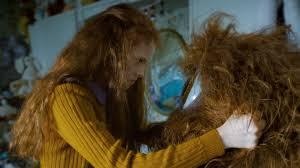
There once was a little girl named Myrtle who could ruin a perfectly pleasant Tuesday simply by entering the room. Not by kicking over chairs or throwing teacups (though she was certainly prone to do both) but by existing in a way that made the air itself feel tight and painful, as if the walls had grown tiny invisible thorns. Myrtle (Iona Bell) was the sort of child who made grown-ups whisper the word “phase” to one another, the way villagers whisper about dragons that may or may not live in the nearby mountains. Surely, they would say, she would grow out of it. But FING!...a delightful, mischievous cinematic confection that premiered in the Children’s Matinee section at the Sundance Film Festival, understands something many adults conveniently forget: some feelings are far too large to simply be “grown out of.”
The Children’s Matinee section itself is a curious little corner of Sundance. It is not as large or flashy as the Midnights or Dramatic Competition, but it is lovingly hand-picked and approved by actual children who are relatives of the festival board. One imagines them watching each film as though they are guarding the doorway to wonder, letting only the truly magical slip through. FING! (arriving all the way from Brisbane only a few weeks after completion) earned their royal approval, and it is not difficult to see why. The film feels plucked from the same imaginative orchard that once gave us chocolate factories, grand high witches, and telekinetic schoolgirls. Its world building hums with that Roald Dahl-esque sense of wonder where the extraordinary is treated as perfectly ordinary and the ordinary is revealed to be quietly extraordinary all along. Director Jeffery Walker crafts the film with the confidence of someone who understands that children do not need stories simplified…they need them enchanted.
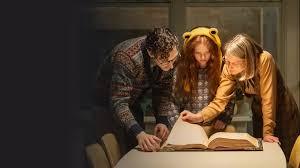
Mr. and Mrs. Meeks (Blake Harrison and Mia Wasikowska) are the sort of couple who smell faintly of paper and cinnamon. They meet in a library, naturally…as two bespectacled sweater-wearing book lovers whose romance blossoms between dusty shelves and whispered recommendations. They marry. They settle into a life of tea, literature, and dreamy contemplation. Their happiness is gentle and tidy, like a row of perfectly aligned bookmarks.
Then Myrtle is born.
She arrives not as a cherub, nor as a sleepy bundle of coos, but as a siren. Her screams slice through the Meeks’ quiet home like a fork dragged across porcelain. The only thing that calms her is a present. Then another. Then another. As Myrtle grows, her list of demands grows too…longer, louder, and more eccentric until it stretches like a royal decree unrolling down the castle steps. She becomes a curious blend of Veruca Salt’s entitlement and Dudley Dursley’s gluttonous dissatisfaction, yet there is something different here, something deeper. Myrtle is not pleased by the things she receives. She is angered by them. The gifts do not fill her. They echo.
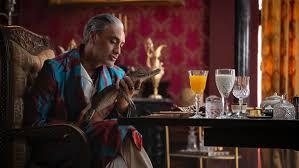
In another corner of the city lives the Viscount (Taika Waititi), an adult who is essentially Myrtle with better tailoring and worse excuses. He occupies a massive house bursting with exotic animals and indulgent luxuries, attended by a nanny (Penelope Wilton) who seems perpetually one sigh away from floating out the window. The Viscount throws temper tantrums with the dramatic flourish of a man who has never once been told “no” and has grown allergic to the word. Where Myrtle’s behavior is excused as childish, his is monstrous. He is what happens when emotional immaturity is fed instead of understood, and when the tantrum is allowed to age like a fine, poisonous wine.
Myrtle, for all her shrillness and grabby rudeness, is not simply spoiled. She is a child with a hole inside her that no toy, no trinket, no mountain of presents can mend. She cannot describe the emptiness, cannot name the sensation scratching at the inside of her ribs. Children rarely possess the nuanced vocabulary required to articulate existential distress. So, their feelings burst forth in the only language they know: stomping feet, shouted demands, and tears that arrive like sudden rainstorms. Her parents, loving but overwhelmed, offer quick fixes…bandages placed upon invisible wounds…never pausing long enough to search for the source of her ache. What Myrtle longs for is something she sees in her mind but cannot properly explain. The word she uses is…Fing.
A Fing, as it turns out, is a creature that looks like a wild ball of reddish fur with a single enormous eye and a mouthful of teeth that cling with impressive determination. It is equal parts adorable and alarming, and the sort of being that would be banned from polite tea parties but secretly adored by children who enjoy the delicious thrill of the slightly grotesque. Myrtle wants a Fing not as a possession, but as a companion. She believes…hopes, really…that it might fill the hollow space inside her. The Viscount, meanwhile, desires a Fing as one more glittering trophy for his collection, a rare object to own and display. One seeks connection. The other seeks conquest. This is where the film’s true magic reveals itself. The narrative problem is not merely that two people want the same creature. It is that they want it for entirely different reasons. Myrtle wants a friend who understands her unspoken sadness. The Viscount wants proof that he can have anything he desires. The Fing becomes a mirror reflecting the inner workings of each mind: one yearning for emotional understanding, the other for superficial satisfaction.
Taika Waititi devours the screen as the Viscount with gleeful villainy, chewing scenery as if it were a particularly tasty biscuit. He is ridiculous and menacing all at once, a walking cautionary tale about what happens when adulthood arrives without empathy. Opposite him, Iona Bell portrays Myrtle with astonishing emotional depth. She is, at first glance, the stereotypical bratty child: needy, shrill, perpetually dissatisfied. Yet Bell threads vulnerability through Myrtle’s tantrums. Even more impressive is the way she imbues the Fing (an inanimate object in reality) with startling personality. Her reactions give it life, and the creature seems to bounce her emotions back at her, amplifying her presence until the two feel inseparable.
FING! is undeniably made for children, yet it carries a truth that adults would do well to remember: the mind is a labyrinth at any age. Emotional torment is not reserved for grown-ups with bills and deadlines. Small children can feel vast, confusing sadness too. They simply lack the words to explain it. Their inner storms arrive disguised as temper tantrums, misunderstood and dismissed as bad behavior rather than cries for translation. The film is cute, enduring, and brimming with imaginative affection. It delights in fantastical creatures and whimsical storytelling while quietly whispering a compassionate message about emotional dysregulation and understanding the unspoken needs of others. Myrtle is not merely spoiled. She is searching. And in that search, FING! finds its heart: a fuzzy, one-eyed, slightly toothy heart that beats with surprising tenderness.
For now, the film is preparing its theatrical journey across Australia and New Zealand through Transmission Films before settling onto the streaming service Stan as a Stan Original, while American audiences must wait a little longer, as no U.S. distributor has yet claimed this curious little creature for their own.
About Professor Horror
At Professor Horror, we don't just watch horror: we live it, study it, and celebrate it. Run by writers, critics, and scholars who've made horror both a passion and a career, our mission is to explore the genre in all its bloody brillance. From big-budget slashers to underground gems, foreign nightmares to literary terrors, we dig into what makes horror tick (and why it sticks with us). We believe horror is more than just entertainment; it's a mirror, a confession, and a survival story. And we care deeply about the people who make it, love it, and keep it alive.