Where Horror Gets Studied, Skewered, and Celebrated.
Newest articles and reviews
(Sundance Film Festival) Once you go WICKER...:Love, Autonomy, and Fairy Tale Defiance
By. Professor Horror
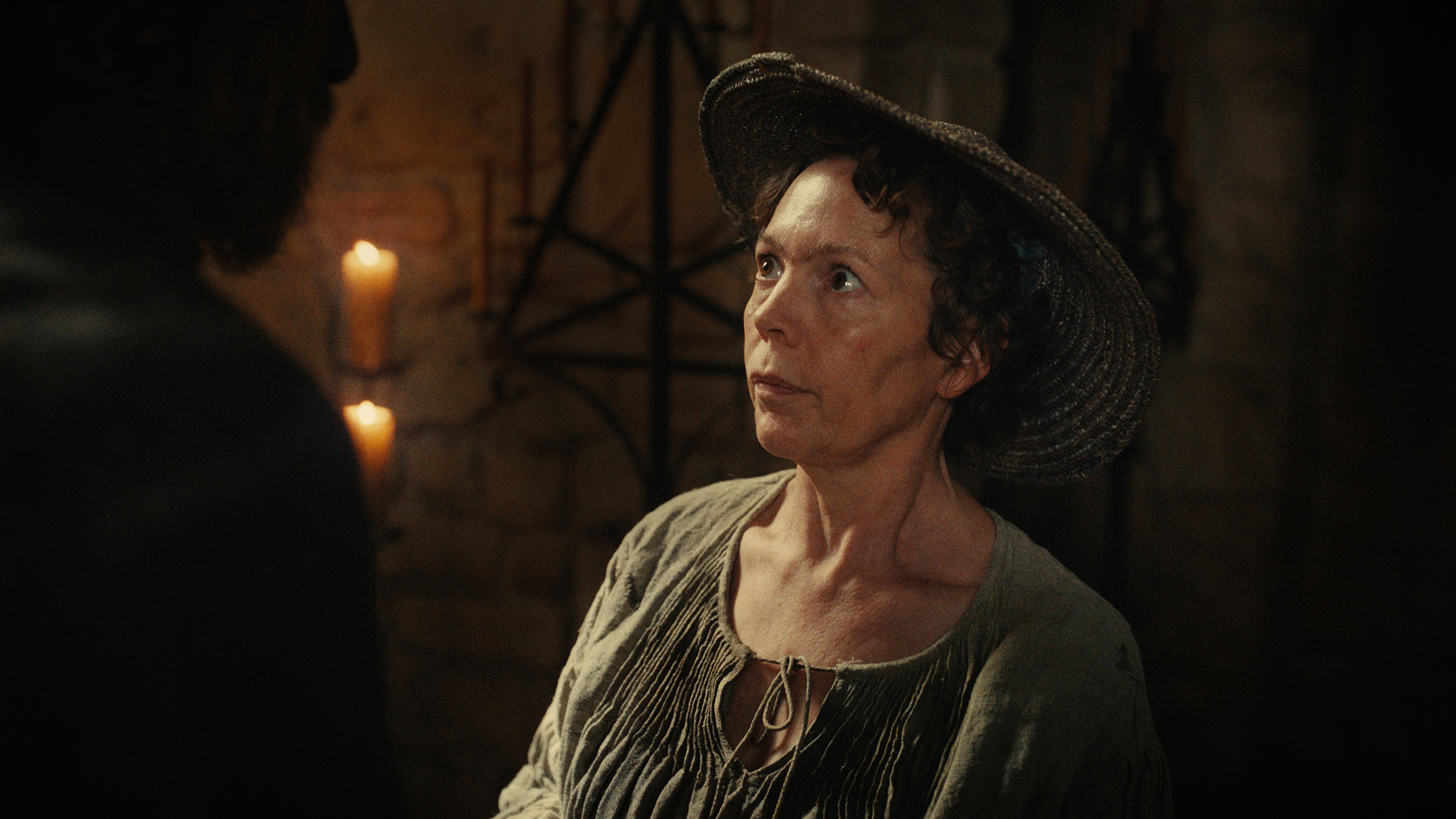
Based off Ursula Wills-Jones’ short story The Wicker Husband, WICKER makes its world premiere at the Sundance Film Festival. First introduced to the story a few years ago, writers and directors Alex Huston Fischer and Eleanor Wilson fell in love with the tale of an independent woman who refuses to marry because she fears losing her agency. To mock her fellow villagers, she commissions the construction of a husband made of wicker, but this unconventional marriage quickly turns into a sweeping romance about being seen and being loved. Fischer and Wilson knew they had to bring this story to the big screen, and in doing so asked the truly important questions: who could lead such a radical, intimate story…and should there be wicker nipples or no wicker nipples? You will be very happy with what they decided on.
The film opens with a strange little analogy about a fish living in the Arctic sea. One day, the fish catches its reflection in the ice and becomes confused by its own image. First, it tries to attack the reflection. Then it grows jealous of its sparkly scales. Finally, it attempts to have sex with the image…and promptly dies as a result. The moral, as the narration bluntly suggests, is not to see your fishy self. This odd, darkly comic parable sets the tone for WICKER, introducing ideas about desire, projection, and the danger of mistaking reflection for fulfillment. Wanting what looks familiar (or worse, wanting oneself) leads only to confusion and destruction. Real connection, the film suggests, requires something stranger, riskier, and alive.
Olivia Colman stars as a fishmonger in a small village sometime in the late 1700s. She spends her mornings fishing and her days peddling her catch at the market. Everyone knows everyone in this village, yet there is a rigid formality to their interactions. People refer to one another by their professions (or their spouse’s profession) rather than by first names, reinforcing the idea that identity is something assigned rather than chosen. Among the working class is Peter Dinklage as the gifted Basket Weaver, a man with near-unworldly skill at his craft. He sells his wares to the wealthier women of the village, namely Tailor’s Wife (Elizabeth Debicki) and her sister, Doctor’s Daughter (soon to be Bottle Washer’s Wife) (Marli Siu). At night, Fisher Woman sits alone in her dark, rundown home and seems to grow bored with her own company. The matrimonial traditions and expectations of the village don’t align with her sense of self, and it appears she is meant to spend her days alone. Or perhaps…nature will find a way.
The village’s marriage traditions take the idea of a woman giving herself completely to her husband to some deeply unsettling extremes. The ceremony itself involves fastening an uncomfortable metal collar around the wife’s neck and declaring the couple no longer man and woman, but man and man’s wife. From that moment on, a woman moves from being defined by her father’s profession to being defined by her husband’s. With such a profound lack of autonomy for women and girls, it is difficult to imagine why anyone would want to marry at all. Fisher Woman appears to be the only villager who views marriage as a barbarous tradition, and while she refuses to let a man define her, she still longs for companionship when night falls.
Fisher Woman understands that a human man could never make her happy, so she asks Basket Weaver to make her a husband. It is, obviously, a strange request, but Basket Weaver takes to it with theatrical enthusiasm, behaving like a Victor Frankenstein convinced he is such a master of creation that he is practically a god. He wants to build the perfect man, and he will accomplish it. The Wicker Husband (Alexander Skarsgård) fulfills Fisher Woman’s life in ways she never anticipated. He praises her, makes the household more manageable, and despite his splintery exterior, the sex is (apparently) amazing. Once you go wicker, you just never go back…you’re fully entwined. The chemistry between Colman and Skarsgård is undeniable, with Colman playing a funny, confident, fiercely independent woman and Skarsgård serving as the Gomez to her Morticia: utterly devoted, endlessly adoring, and delighted to worship her. Despite these two deeply rooted performances, the hardest-working element in the film is unquestionably...their bed.
In a village where men rule their wives, this strange couple draws a great deal of attention (most of it hostile) as the other villagers stand agog at the spectacle of romance built on mutual joy. Most are unable (or unwilling) to understand Fisher Woman and Wicker Husband’s love, and the devoted couple soon face mounting problems as their happiness disrupts the status quo. Told much like a fantastical fable, the story follows a maiden who finds love and fulfillment, only to be met with corrosive jealousy that threatens to splinter that joy. Happiness, it turns out, is the real provocation. The film’s fairy-tale qualities are heightened by the magical craftsmanship of Weta Workshop, whose wicker creation is both tactile and expressive. The costume is not simply impressive, it is emotionally legible, allowing Wicker Husband to feel warm, present, and deeply human despite his constructed form. He is never treated as a novelty or a joke, but as a sincere romantic lead whose artificiality only highlights the stiffness and cruelty of the village’s traditions.
WICKER tells an achingly beautiful story with striking creature design, thoughtfully textured world-building, and characters who are equal parts lovable and infuriating. I can’t stress this enough…this is not a Beauty and the Beast story, but a love story where no one is asked to be tamed, fixed, or transformed. At its heart, the narrative follows a woman who refuses to accept the path assigned to her gender and instead chooses to live unapologetically as herself. Olivia Colman is predictably phenomenal, grounding the film’s fantasy with humor, resolve, and vulnerability. The audience will love following Fisher Woman as she chases a happily ever after on her own terms. For those of you who have seen the film, I do have one very important question: WHAT ABOUT THE WICKER WOMAN?!
WICKER currently does not have a distributor, but hopefully Basket Weaver can build one of those next.
About Professor Horror
At Professor Horror, we don't just watch horror: we live it, study it, and celebrate it. Run by writers, critics, and scholars who've made horror both a passion and a career, our mission is to explore the genre in all its bloody brillance. From big-budget slashers to underground gems, foreign nightmares to literary terrors, we dig into what makes horror tick (and why it sticks with us). We believe horror is more than just entertainment; it's a mirror, a confession, and a survival story. And we care deeply about the people who make it, love it, and keep it alive.