Where Horror Gets Studied, Skewered, and Celebrated.
Newest articles and reviews
(Sundance Film Festival) The Horrors of Pregnancy in MUM, I'M ALIEN PREGNANT
By. Professor Horror
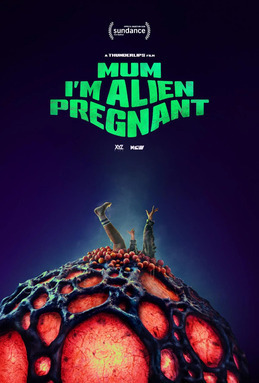
MUM, I’M ALIEN PREGNANT is a New Zealand horror-comedy that premiered at the Sundance Film Festival and is directed by Jordan Mark Windsor and Sean Wallace…and yes, the title alone should prepare you for the fact that this movie is not here to gently probe your comfort zone. It is here with a full-on tractor beam and zero consent forms. This is a movie made for anyone who has experienced the horrors of giving birth or being born. If you are one of the rare unicorns not traumatized by the concept of existence entering through a biological escape hatch, then congratulations…this is a movie specifically engineered to make you queasy anyway. Think of it as body horror meets sex-ed pamphlet written by a xenomorph with a sense of humor.
Mary (Hannah Lynch) is a do-nothing thirty-something who treats life like an optional side quest. She lounges outside, snacks in hand, letting the world spin without her like she’s buffering in human form. Her mother Cynthia (Yvette Parsons) wastes absolutely no oxygen expressing disappointment in Mary’s lack of direction. She begs her to do something. Anything. A job would be nice. A purpose would be great. But if watching alien vagina anime under the covers is what fuels the day, well… at least it’s a hobby. In the same apartment complex, another single mother, Ann (Jackie van Beek), is dealing with her own intergalactic inconvenience. Her son Boo (Arlo Green) causes electrical disturbances whenever he, uh… fiddles with the joystick. Every time Boo launches his personal rocket, the building’s power grid goes into full UFO-sighting mode. It bizarre for sure, but Cynthia and Ann still bond over the universal single-mom experience of raising grown weird kids who make the neighbors nervous. Cynthia then pushes aggressively for Mary and Boo to get together, because nothing says “healthy romance” like parental matchmaking based on shared awkwardness and whispered rumors about extraterrestrial genitalia.
The mothers gossip about Boo’s deformity, which turns out to be less “medical pamphlet” and more “Roswell autopsy.” What the film smartly layers in is Boo’s very real fear: if anyone finds out about his alien anatomy, he’s convinced he’ll be taken away, dissected, or locked in some government basement next to dusty VHS tapes and a jar labeled Area 51: Do Not Touch. His anxiety isn’t played purely for laughs because it becomes a quiet metaphor for bodily difference and the terror of being “outed” for something you can’t control. Mary, already a connoisseur of animated alien anatomy, finds Boo’s situation less horrifying and more… inspiring. Their connection forms through mutual isolation, mutual curiosity, and mutual masturbation that results in some very hazardous alien splooge. The film leans hard into the absurdity here, using humor as both lubricant and weapon. It’s not just shock value, but it’s satire with slime.
Mary takes every precaution, but alien biology laughs in the face of human contraceptives. She starts showing signs of pregnancy almost immediately and she knows right away that this isn’t a human situation. Boo is half alien, and therefore she is alien pregnant. There’s no denial phase, no “maybe it’s food poisoning.” It’s instant cosmic confirmation. Within hours she develops a rash that looks like her immune system joined a rave, starts vomiting blue goo like a Smurf possessed by The Exorcist, and excretes slime from her vagina. The film’s use of bodily fluids is excessive, colorful, and intentionally disgusting, but it also isn’t that far removed from real pregnancy experiences. Windsor and Wallace exaggerate the visuals to absurd levels, but the underlying message is uncomfortably grounded: pregnancy is messy, unpredictable, and often treated like a public spectacle rather than a private bodily process.
A huge part of why the film lands its gross-out humor is the commitment to practical effects. The alien penis, the splooge, the birthing process: all of it is done with tactile, gooey, in-camera effects rather than slick CGI. It gives the movie a handmade, squishy authenticity that makes every bodily transformation feel uncomfortably real. You can practically hear the latex breathing. The prosthetics and fluids aren’t just there to shock; they reinforce the theme that bodies are physical, vulnerable, and impossible to fully sanitize.
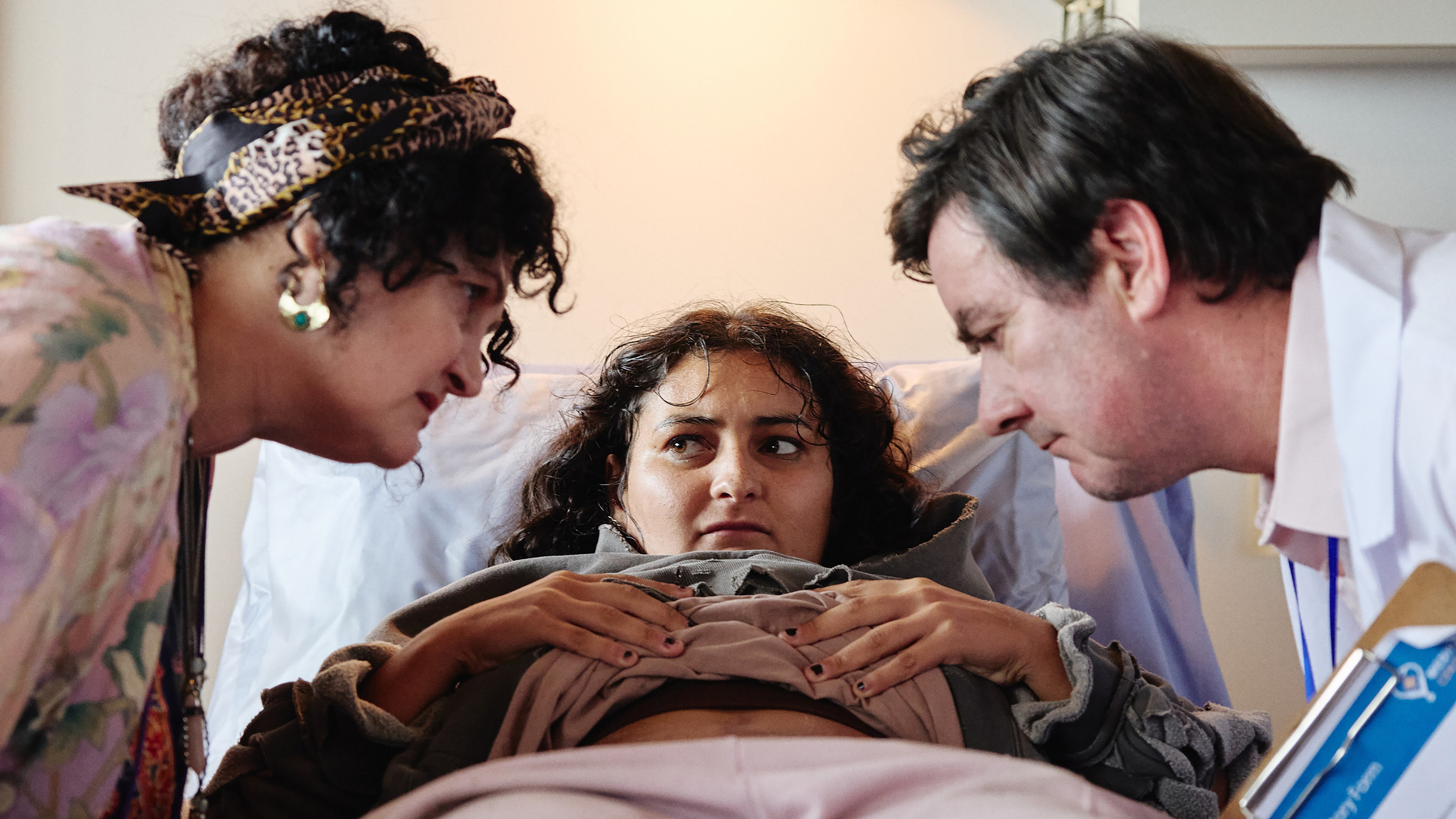
However, the horror isn’t just the alien pregnancy or the gallons of neon secretion. It’s the behavior of the parents. As much as Cynthia and Ann complain about their children needing direction, they refuse to respect any boundary Mary or Boo set. They invade rooms, demand details, and treat their adult children’s bodies and lives as communal property. The film becomes less about alien anatomy and more about emotional umbilical cords that never get cut. These mothers don’t want their children to grow up because their identities are fused together like conjoined planets in a dysfunctional solar system.
When Mary becomes pregnant, the pregnancy quickly becomes its own entity: a parasite, a character, an invader with its own narrative arc. The woman carrying it becomes secondary, almost invisible, as if her body is merely rented real estate. This mirrors how society often treats pregnancy: the fetus becomes the celebrity, the woman becomes the venue. By making the pregnancy literally alien, the film externalizes this experience. Mary is portrayed as irrational, unstable, and grotesque, while Boo is allowed fear, sympathy, and privacy. His penis becomes a headline. Her suffering becomes background noise. The film repeatedly asks (without directly asking) why a healthy man’s reproductive organ commands more attention than a sick woman’s entire body. The contrast is sharp and deliberate. Boo gets concern for his “condition,” while Mary gets scrutiny for her “behavior.” His alien appendage is mysterious and fascinating. Her alien infection is embarrassing and inconvenient. The humor never fully softens the critique, but it just coats it in fluorescent slime so it slides down easier.
In MUM, I’M ALIEN PREGNANT, Windsor and Wallace ultimately craft a horror-comedy about bodily autonomy, parental control, and the absurd hierarchy of attention in gendered spaces. It’s a movie that argues a woman begging for help can still receive less empathy than a man’s weird penis receiving admiration. It’s vulgar, funny, nauseating, and oddly thoughtful…like if Alien and a late-night adult cartoon had a baby and then immediately regretted the pregnancy. The film currently does not have distribution, which feels ironic given how loudly it screams to be seen. It’s the kind of movie that crawls into your brain like a facehugger and refuses to leave, occasionally popping out just to remind you that life begins at conception… and sometimes so does existential dread.
About Professor Horror
At Professor Horror, we don't just watch horror: we live it, study it, and celebrate it. Run by writers, critics, and scholars who've made horror both a passion and a career, our mission is to explore the genre in all its bloody brillance. From big-budget slashers to underground gems, foreign nightmares to literary terrors, we dig into what makes horror tick (and why it sticks with us). We believe horror is more than just entertainment; it's a mirror, a confession, and a survival story. And we care deeply about the people who make it, love it, and keep it alive.